Imagine a fruit so rooted in story and vibrant color that the Greeks honored it as a symbol of life, fertility, and abundance. That fruit is the pomegranate, a perfectly round, red colored fruit that holding magic within. When you break the firm red shell of the fruit, you will find a pale layer that guards countless tiny ruby red seeds, known as arils. These tiny seeds release a taste that is both sweet and tart. The pomegranate began its journey on the dry plains of Iran and from there its fame and seeds moved to homes of Asia, Africa, and Europe. For generations people have turned to its red essence not only for its taste and color but also for its link to enrich the blood. This fruit blooms from late summer through the cool months of winter. As we look past tradition, medicinal science has confirmed that pomegranate supports the heart. Read on to see what modern science is uncovering about how this historic, jewel toned fruit works to shield and sustain the rhythm of your life.
Benefits of Pomegranate
This rich red fruit carries many nutritional gains that support hemoglobin and ease other concerns. Below you will find the list of ingredients found in pomegranate fruits along with their noted benefits:
1. Rich in Nutrients: This Iran born fruit holds low calories, 4.7 grams of protein, 11.3 grams of fiber, with 32% of vitamin C in daily value, 27% of daily folate, 8% of daily magnesium, 8% of phosphorus and 13% of daily potassium.
2. Antioxidant Properties: Pomegranate carries strong antioxidants like punicalagins, anthocyanins and hydrolyzable tannins that clear free radicals from the body. Free radicals spark the start of many deadly diseases like cancer. So, a pomegranate a day may help keep cancer away.
3. Anti inflammatory Properties: Since this fruit is rich in antioxidants, they work to ease inflammation. Long term inflammation in the body can lead to the rise of heart disease, diabetes mellitus and cancer.
4. Anticancerous Property: Because of its anti-inflammatory and antioxidant power cancerous threats stay at bay from your body.
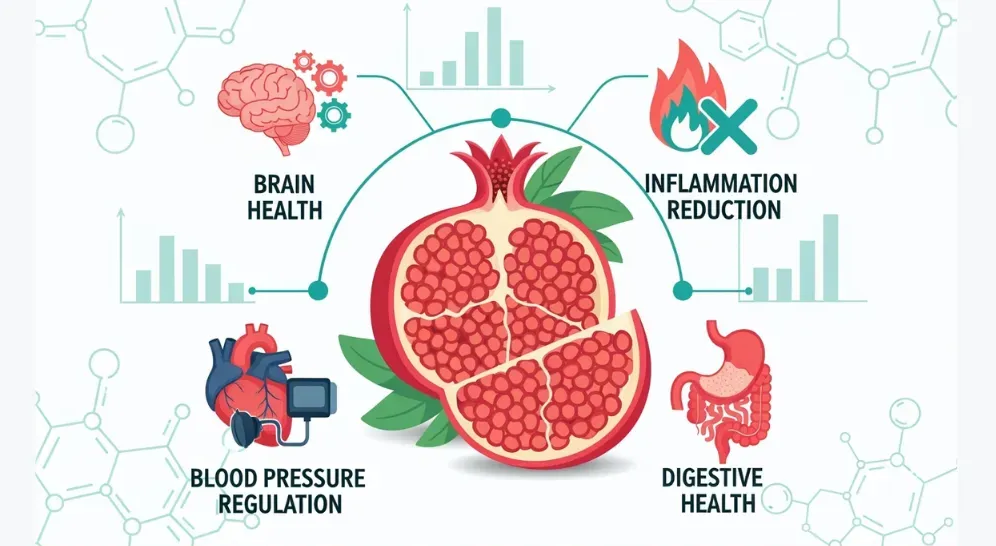
5. Heart Health Benefits: A study on 100 patients on the effect of pomegranate on heart patients gave them 220 ml of pomegranate juice daily and found that sensitive c reactive protein, a heart attack marker, dropped sharply in the body. Among heart patients with high blood pressure their pressure also fell.
6. Reduces Kidney Stone: A study done in 2014 found that stone forming traits in the body reduced after drinking pomegranate juice in people who faced repeated kidney stone issues.
7. Antimicrobial Properties: Each part of the pomegranate whether the fruit, peel, arils, flower or bark holds antimicrobial strength. Pomegranate is full of chemicals like punicalagin and ellagic acid. Due to these elements pomegranate offers strong antimicrobial support that keeps you away from many bacterial infections.
8. Protects Your Brain: Pomegranate holds an antioxidant called ellagitannins which guards the body from free radicals. This part also helps shield the brain from Parkinson disease that comes from oxidative harm leading to the death of neurons. This fruit protects neurons from harm and shields you from Alzheimer and Parkinson disease.
9. Good for Your Gut: Pomegranate carries prebiotic strength meaning it supports the growth of good bacteria in your gut which helps improve digestion and lifts digestive health. This steady support from pomegranate adds depth to your wellness as each part of the fruit works with your body to build strength balance energy and calm that helps you feel grounded steady and fully nourished daily.
How Pomegranate Affects Heart Health
In the early modern period when medical science was not advanced and was still growing people relied on simple signs to guess which fruit or vegetable might help with certain health issues. They looked at shapes to guide them. The inner part of a walnut looked like the human brain so many believed it could support the mind. The shape of a kidney bean reminded them of the kidney so it was eaten with the hope it would guard the organ that filters the blood. Red fruits like pomegranate were chosen for blood concerns and heart issues since their deep colour hinted at strength. Even today scientists have shown that pomegranate offers many heart health gains. Packed with antioxidants like polyphenols tannins and anthocyanins it shields the heart from oxidative stress which harms heart cells and blood vessels. It helps lower bad cholesterol called low density lipid and raises good cholesterol known as high density lipid which lowers the chance of plaque building in heart vessels and keeps oxygen flowing to heart cells. The antioxidant strength also supports the heart by easing strain on blood vessels and helping with steady blood pressure. These qualities make pomegranate a trusted fruit for steady and lasting heart support today.
Best Ways to Consume Pomegranate
To gain the full benefit of pomegranate for heart health here are simple ways you can enjoy it so the fruit can show its effect:
1. Pomegranate Juice: A daily glass of about 240 ml supports lower arterial thickness boosts good cholesterol and helps steady your blood pressure.
2. Fresh Seeds: You can eat the seeds as they are or add them to salad oatmeal or yogurt.
3. Create a detox water: You can soak the seeds with mint in water overnight. It turns into a gentle detox drink.
How Much Do You Need?
If you are someone who wants the exact amount that will support your heart health then here is the daily guide for you:
1. A Medium Pomegranate: Eating one medium fruit each day helps improve blood flow and lowers cholesterol buildup around the heart muscle.
2. 240 ml of Juice: Drinking 240 ml each day can help lower blood pressure and support vessel health.
3. Three Pomegranates in a Day: If you are able it is best to have at least three pomegranates a day to keep issues like high blood pressure away for health.
Who Should Be Cautious?
Pomegranate carries medicinal strength and as this article focuses on heart support it is important to know that some ingredients in the fruit can interact with medicines you may already be taking so here is a list of common drugs that react with pomegranate and the harm they may bring:
1. Blood Pressure Medication: Pomegranate has a natural blood pressure lowering effect and taking it with such drugs can push pressure too low and become dangerous.
2. Blood Thinner: Pomegranate can slow the breakdown of blood thinning medicine and raise the chance of side effects.
3. Cholesterol Medication: Pomegranate can also slow the breakdown of cholesterol drugs and increase unwanted effects.
Conclusion
Pomegranate is not just a sweet fruit. It carries strong medicinal value. When taken in the right amount and with care for interactions it can bring benefit. With many fruits being chemically grown and altered it is wise to choose ones that come with a mark of purity and that same care should be taken with your medicine. SayaCare is an online pharmacy that offers test reports for every medicine with up to 80 percent off delivered to your door.