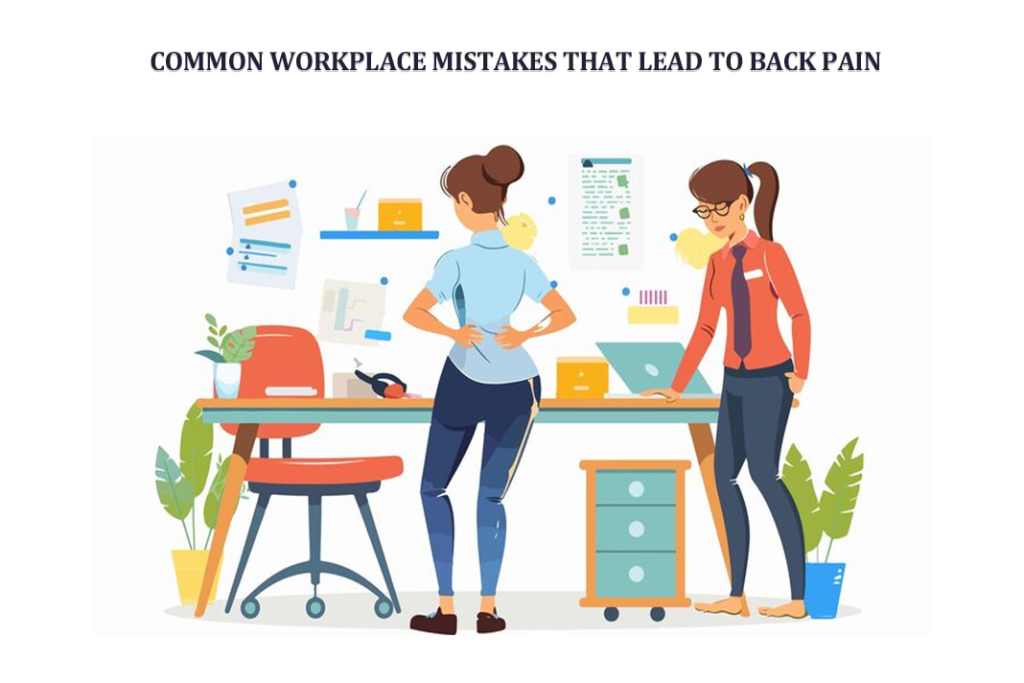
Have you ever stood up after a perfectly ordinary workday and thought, how is my back this sore? Not after moving furniture. Not after carrying boxes. Not after spending the weekend helping a friend move apartments, just after work.
A few emails. A couple of meetings. Maybe some spreadsheets. Maybe customer calls. Nothing dramatic.
Yet somehow your lower back feels tight, your shoulders are carrying tension they didn’t have that morning, and getting out of your chair requires a small mental commitment. I’ve always found that strange.
Most people picture back pain as the result of a single bad lift or an obvious injury. Reality is usually less cinematic. More boring, actually. Back pain often sneaks in through repetition. Tiny habits. Every day, decisions nobody thinks twice about.
The chair you sink into for eight hours. The monitor is slightly too low. The way you stand during a shift without ever changing position. None of these things feels significant on its own. That’s what makes them dangerous.
I once worked with someone who spent months researching ergonomic office chairs. Reviews, comparison charts, recommendations from colleagues, and the whole process. Eventually, she bought one of the most expensive chairs in the office.
Three months later, her back still hurt. The problem? She spent the entire day leaning forward, hovering over her keyboard like she was trying to hear a secret. The chair got blamed. The habit escaped unnoticed. That happens more often than people think.
Workplace back pain rarely appears out of nowhere. It usually leaves clues. Small ones at first. Easy to ignore. Until they’re not.
We Blame the Chair Because It’s Easy
Whenever someone’s back starts hurting at work, the chair becomes the prime suspect. Sometimes that’s fair. A badly designed chair can absolutely contribute to discomfort. But I’ve noticed that people often focus on furniture because it’s easier than examining behavior.
Buying a new chair feels productive. Changing daily habits is harder. Walk through any office, and you’ll spot the same patterns: people are sitting on the edge of their seats. People are crossing into awkward positions for hours. People are leaning toward screens that are already within arm’s reach.
It’s almost as if we’re fighting our workstations instead of using them. Even the best ergonomic chair can’t support a posture you abandon five minutes after sitting down.
Meeting That Quietly Stole Your Afternoon
One of the biggest contributors to back pain isn’t posture. It’s stillness. The average workday has a strange way of disappearing. You sit down at 9 a.m. A meeting starts. Then another. A deadline appears.
Someone messages you with an urgent request. The next thing you know, it’s 2 p.m., and you’ve barely moved. No alarm goes off. No immediate pain appears. That’s part of the problem.
The body is remarkably patient. It absorbs poor treatment for a surprisingly long time before complaining. Then one day, seemingly without warning, stiffness becomes a regular companion.
I’ve had days where I was convinced I’d been incredibly productive, only to realize I’d spent nearly five hours in the same position.
Productive? Maybe.
Good for my spine? Not even close.
Laptop Problem Nobody Talks About Enough
Laptops are brilliant pieces of technology. They’re also ergonomic compromises disguised as conveniences. To use a laptop, something has to be lost. Either your neck bends down toward the screen, or your arms sit awkwardly because you’ve elevated the device.
There’s no perfect middle ground. I see this constantly with remote workers. The setup starts as a temporary solution. A few days at the dining table. A week on the couch. Then months pass. The temporary arrangement becomes normal. The body adapts because that’s what bodies do. But adaptation isn’t the same thing as comfort.
I’ve met people who spent years wondering why their upper back felt constantly tight while working from a laptop balanced on a coffee table. The mystery wasn’t particularly mysterious.
Standing All Day Has Its Own Consequences
A few years ago, workplace wellness conversations started treating standing as the cure for sitting. The reality is more complicated.
Talk to retail employees, warehouse workers, reception staff, or production workers. They’ll tell you quickly that standing all day creates its own type of fatigue.
It’s a different ache. A slower one. The kind that builds gradually until your lower back feels heavier than it should.
I once watched a cashier during a busy shift. She wasn’t lifting anything substantial. She wasn’t performing physically demanding work. Yet by the end of the day, she was shifting her weight every few seconds, trying to stay comfortable. That’s not unusual.
For employees who spend long periods on hard surfaces, practical interventions matter. Good footwear helps. Regular movement helps even more. And in many workplaces, anti-fatigue mats reduce the constant strain that accumulates beneath the surface hour after hour. The goal isn’t to sit all day. It isn’t to stand all day either. It’s movement. Humans tend to do best somewhere in the middle.
Little Twists Nobody Notices
Back pain doesn’t always come from obvious causes. Sometimes it comes from the way a desk is organized. A phone positioned slightly too far away. A monitor is angled awkwardly.
Documents are stored behind the body instead of beside it. Tiny twists feel harmless because they are harmless once. Workplaces don’t deal in one. They deal in repetition.
One awkward movement performed two hundred times a day becomes something else entirely. I’ve seen people spend years reaching across their bodies for tools, files, or equipment without realizing how often they were rotating their spines.
Not because they were careless. Because humans are incredibly good at normalizing discomfort.
Ignoring the First Signals
Most workplace injuries don’t begin with pain. They begin with discomfort. A distinction people rarely appreciate until later. Pain gets attention. Discomfort gets negotiated with.
“We’ll see how it feels tomorrow.”
“It’s probably just a bad chair.”
“I probably slept funny.”
Maybe. But maybe not. The body is usually pretty generous with warnings. The challenge is that those warnings arrive quietly.
A stiff neck. A tight lower back. Shoulders that feel permanently elevated. Small signs. Easy to dismiss. Until they stop being small.
Stress Shows Up in the Back Too
Not every workplace mistake is physical. Some are psychological. Have you ever noticed how your shoulders creep upward during a stressful day? Most people don’t. At least not while it’s happening.
Deadlines, difficult clients, constant notifications, overflowing inboxes, stress changes posture in subtle ways. Muscles stay tense longer than they should. Breathing becomes shallower. Movement becomes less natural.
Then people wonder why their backs hurt despite having a perfectly ergonomic workstation. The answer isn’t always found in the furniture. Sometimes it’s found in the workload.
Real Issue Isn’t One Big Mistake
If there’s one thing years of observing workplace habits have taught me, it’s this: Back pain is rarely dramatic. It’s usually cumulative. That’s frustrating because cumulative problems don’t provide clear villains. There’s no single moment to point at. No obvious cause.
Just a collection of ordinary choices repeated thousands of times, a little slouching. Too much sitting. Not enough movement. Poor workstation habits, long hours standing without support.
In environments where standing is unavoidable, simple solutions like anti-fatigue mats can reduce strain. Elsewhere, the answer may be better workstation positioning or simply getting up more often. None of these changes sounds revolutionary. That’s okay. The most effective workplace improvements usually aren’t.
Conclusion
Back pain has a way of convincing people that something serious must have happened. Often, nothing serious happened at all. That’s the point. A hundred small habits quietly accumulated until the body finally demanded attention.
The encouraging part is that small habits work both ways. The same daily routines that create discomfort can often be adjusted to reduce it. A better workstation setup. More movement throughout the day.
Greater awareness of posture. Strategic use of anti-fatigue mats for employees who spend hours on their feet. No miracle cures. No dramatic transformations. Just better habits repeated consistently. More often than not, that’s where real improvement begins.